
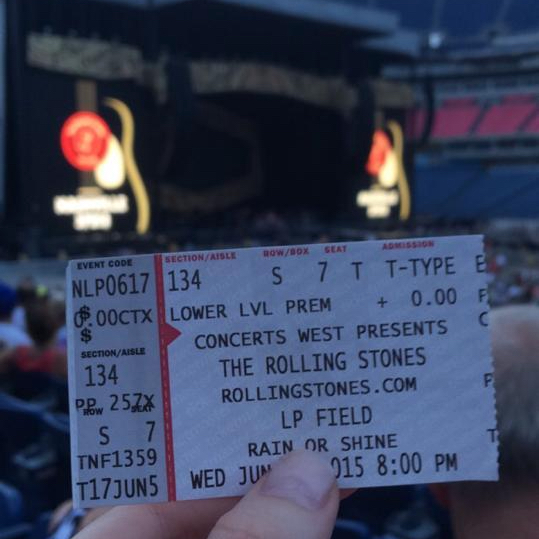
Who would you say is the most influential musician of all time?
It is a question with no single definite answer. Could it be Bach? Elvis? Prince? The case could be made for any of them, but consider this: the self-titled Greatest Rock and Roll Band in the World, The Rolling Stones.
Mick Jagger and Keith Richards are the core of the band, and with Brian Jones, Bill Wyman, Charlie Watts and Ian Stewart, formed the now-iconic group in 1962. In 1989, the band was inducted into the Rock & Roll Hall of Fame. Over 50 years later, the Stones have released 30 studio albums, sold over 200 million records and performed dozens of tours. Jagger and Richards are still performing together.
Beyond the numbers, the Stones are legendary.
Steven Van Zandt, the guitarist of Bruce Springsteen’s E Street Band, summed up the band’s appeal to Rolling Stone. “With the Stones, the message was, ‘Maybe you can do this.’ The hair was sloppier. The harmonies were a bit off,” he said. “And I don’t remember them smiling at all.’’ It was unlike anything music fans had ever seen.
In 1969, the band began referring to themselves as “The Greatest Rock and Roll Band in the World” and, as described on the Stones’ website, they had to give performances that lived up to the title.
Mick Jagger’s stage presence is unmatched. He was among the first popular artists who let the music move him—running around stage, dancing like no one was watching, strutting like the stage was his runway. Crowds loved it, and still do.

Plus, they made good music. They took strong influence by R&B and Blues, but expanded in all directions. Of course, there’s the classic rock songs like “Satisfaction” and “Sympathy for the Devil.” But, put “Dead Flowers” or “Honky Tonk Woman” (or better yet, “Country Honk”) on any country album and it would probably be the best song on it. “Gimme Shelter” and “You Can’t Always Get What You Want” are popular choices for movie soundtracks. Recently, an instrumental version “Paint It, Black” was used in HBO’s hit show Westworld.
Further than their continued relevance in pop culture, they have opened doors for countless musicians after them.
“The acceptance of Jagger’s voice on pop radio was a turning point in rock & roll. He broke open the door for everyone else. Suddenly, Eric Burdon and Van Morrison weren’t so weird — even Bob Dylan,” Van Zandt wrote for Rolling Stone.
Too many artists to count include the Stones in their list of influences including The Black Keys, AC/DC, Foo Fighters and David Bowie. Even Lil Wayne has sampled the Stones.
Their logo is one of the most iconic symbols to come out of the 20th century. Teenagers today who likely can’t name more than one Stones song wear it on their T-shirts, proving that the influence of “The Greatest Rock and Roll Band in the World”—in musicianship, performance, pop culture and branding—cannot be underestimated.
Caroline Sheridan
CCPA 3335 Blog #2
 Caroline Sheridan